
idGenius: Governing Internal and External AI Agents and NHIs Across Organizational Boundaries
Right there, near you, some automated program acts without anyone saying yes. Built once to handle buying stuff, given access keys, linked to company tools and an outside service. That work ended weeks back. Yet it keeps going - logging in, reaching out, passing jobs to helpers it wakes up when needed. No person watches over it. Ask about its actions last month, who saw what, and truth is, you would not know where to start.
This is not some imaginary test. What you're seeing now is what actually happens when agentic AI moves into companies - which it already did, quietly, over a year and a half. Most systems meant to manage access were never made for this kind of shift. Machines pretending to be users have long been more common than real people - often sixty times over. But here’s the change: these aren’t static bots waiting around anymore. They think through steps. Take multiple connected actions. Create smaller helpers on their own. Slowly, they cross boundaries - slipping between your team, outside suppliers, joint projects, even distant AI tools tied into daily work.
Years back, the boundary changed - now it’s about who you are. With agentic AI, the toughest piece has slipped beyond where your oversight tools reach.
The Identity Explosion Shifts Form
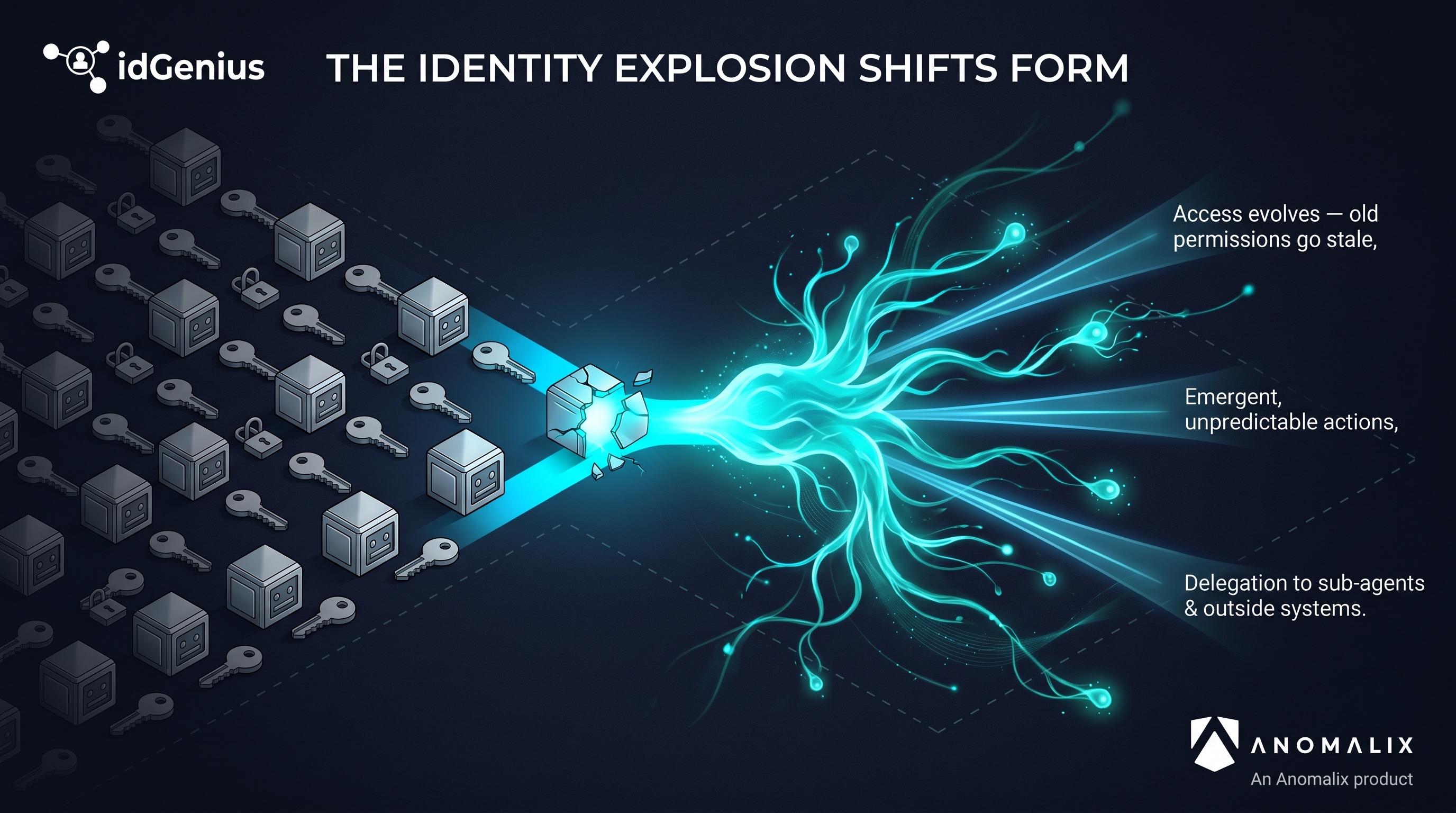
A long time ago people mostly talked about non-living users like service accounts, API keys, or bots that followed fixed routines. These weren’t alive but had access. They’d log in, run their task, then stop - always acting just as built. One by one they showed up in systems, doing repeatable work without surprises. Watching over them wasn't easy, yet possible - track where they appeared, assign responsibility, limit what they could do, remove when outdated. Control stayed within reach because nothing changed much. Their roles rarely grew beyond original design. Rules applied cleanly since behavior didn’t shift overnight. Each piece fit into known patterns. Overseeing meant checking boxes regularly. Nothing ran wild back then.
Something shifts when agents enter the scene. Not just another tool ticking off tasks one after another. Instead, picture something that takes a direction and runs with it. Shaped less by preset rules, more by what happens around it. Given the same start point, two might end up worlds apart simply due to where they’ve been pulled next. What matters most isn’t setup - it’s response. A live thing bending course midstep based on signals, inputs, nudges along the way. By week’s end, identical origins mean nothing if paths diverge early enough.
This shifts the risks in three clear directions. Right away, because access evolves as the agent operates, initial permission limits become outdated once it begins adapting on its own. Instead of fixed behaviors, actions arise unpredictably - making rigid rules blind to real usage. What also happens is delegation: smaller helpers or outside systems get pulled in, carrying fragments of trust while skipping oversight entirely. Without your permission, it happened. On your account, the agent opened the door when you were distracted
Traditional Governance Struggles With Autonomous Identities
Working differently now, most companies still apply old systems meant for people or basic digital IDs to manage AI helpers. That mismatch shows up fast.
Out there, identity governance often follows employees - hired, shifted, or exited - tied tightly to personnel files. Not so for automated agents. These pop up without any hiring paperwork, created instead by coders, departments, outside partners, sometimes even self-replicating through other bots already running. A privileged access management system may lock down passwords and manage logins, solving part of the puzzle. Yet it stays silent on something deeper: does this bot still act as intended, when left to decide things alone? Lightweight NHI records list service accounts created by various teams recently. Yet these systems never planned for agent-driven inquiries. Accountability trails grow fuzzy fast. Someone must own each automated role clearly. Permissions granted often drift from real-world actions taken. Contracts tied to outside partners shape conduct rules. Expiration dates on access rights stay unclear too. Timelines demand transparency just as much.
Left hanging, these questions bring back old problems - credentials without owners, too much access handed out freely, hidden permissions slipping under the radar - but now they spread faster, driven by automated workflows. One overlooked agent isn’t just an idle login anymore. Think of it as a starting point, quietly branching into more, each piece holding leftover rights inside systems you’ve stopped watching.
The Hidden Cost of Unseen Limits
This is when things turn tricky. Not because of people, but because machines ignore company hierarchies entirely. Boundaries drawn on paper mean nothing to them. What separates one organization from another - legal lines, agreements - gets blurred fast.
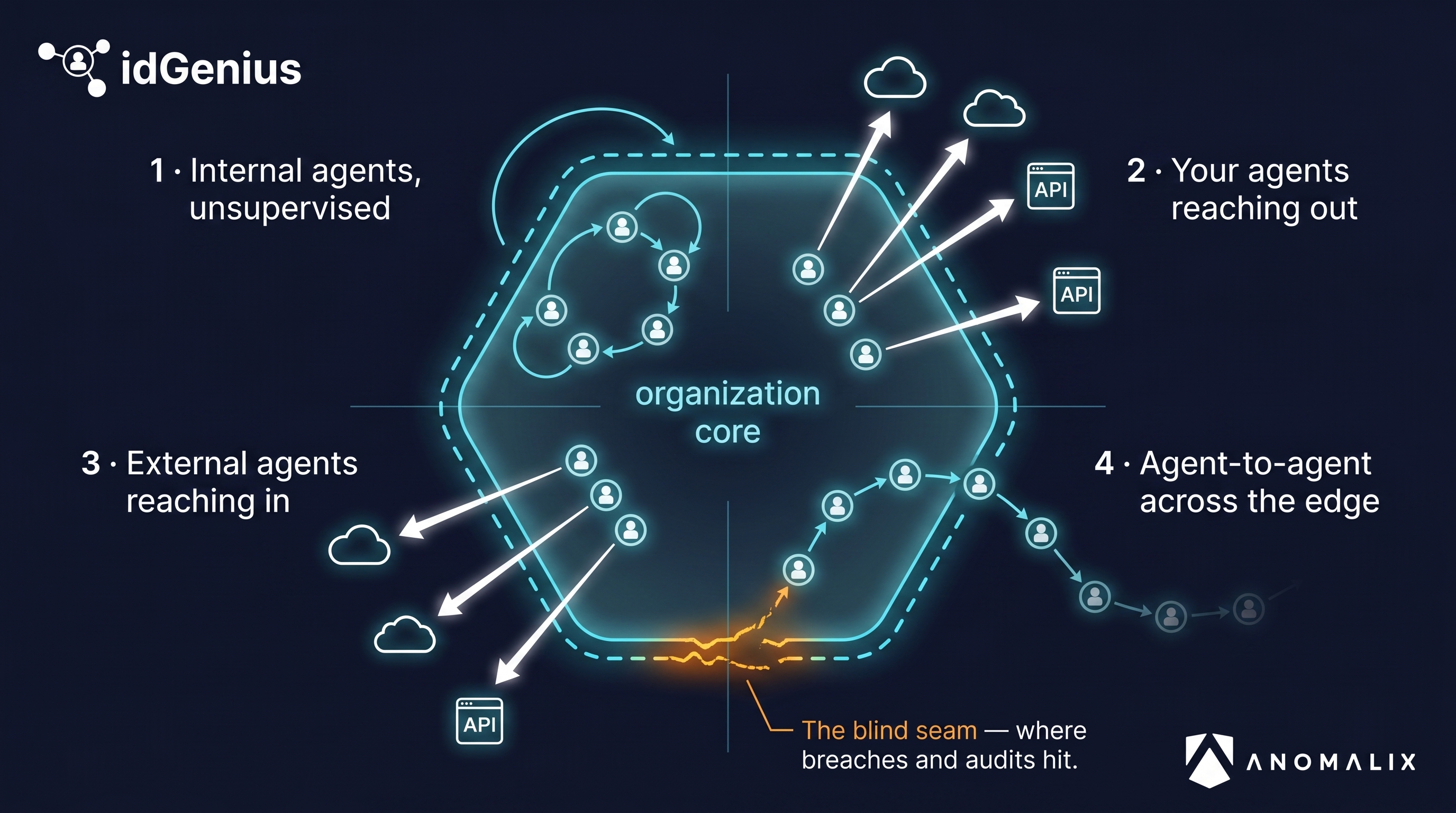
Consider the four traffic patterns already live in most environments:
- Inside your network, agents operate without oversight. These internal automations interact with critical systems and private information - highly noticeable yet often unmanaged.
- Out there, your agents log into external platforms. When one signs into a supplier’s API or a client’s system, it brings your name along - along with the risks that come with it. A single connection can stretch your responsibility across borders you didn’t build.
- Out there, someone else’s tools touch your systems. Could be a supplier’s artificial intelligence platform. Maybe it’s an outside firm running automated tasks. Or perhaps a collaborator’s software acting on behalf of another company entirely. These connections supposedly follow rules written in agreements - though hardly any setup checks those promises where access really happens.
- Across the edge, agents talk to agents. One triggers a model outside your team, which then pulls in another. Control slips through companies without one person holding it all together. No full record follows where decisions really went.
Each flow carries someone’s access rights. Yet nearly all fail to connect - properly or at all - to a company, contract, supporting party, deadline, or security stance. Reality shows they often link to no clear source. These sit stranded where oversight ends and supplier control begins, the weak spot both hackers and inspectors target fastest. Breaches tied to outside parties make up too much damage already; self-running accounts moving across that line stretch the vulnerability even further.
Governing AI Agents as Independent Entities
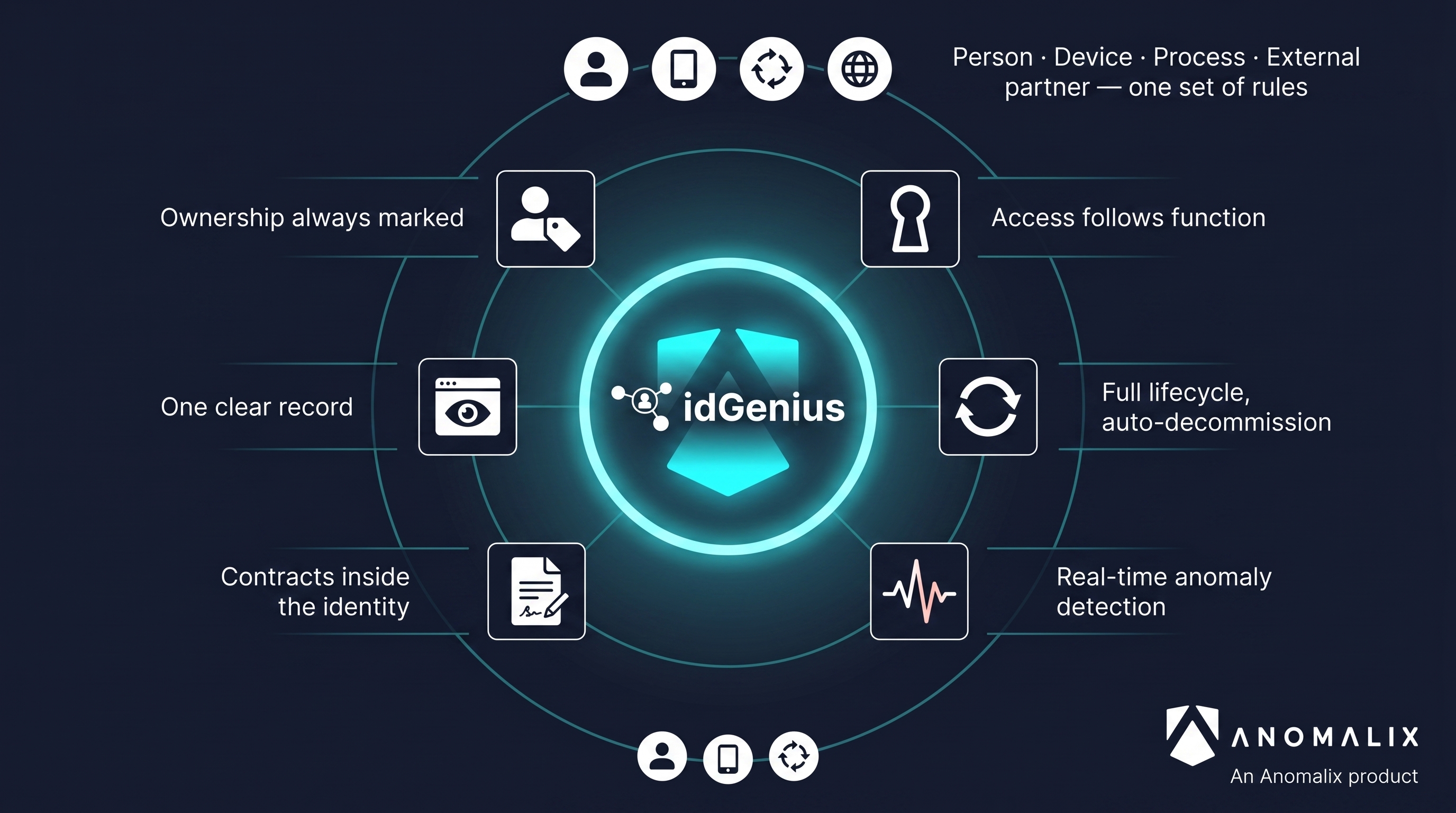
From the start, idGenius rested on an idea that still fits even as new agents appear: each identity entering your space - whether person, device, or self-running system - should follow identical rules, life stages, and responsibility checks. Far from being tacked on like an afterthought, these agents function as official identities. They live within a single view of operations, shaped and tracked just like freelancers, outside suppliers, background processes, and external groups they routinely support.
Out there, one idea slips quietly into several skills - skills that count when machines or agents move across company borders. These traits show up most where identity isn’t human but still needs access, trust, movement.
Ownership always marked. Each agent, whether inside your team or brought by a supplier, links back to a named person in charge. When it comes from beyond your company, that link includes the external group involved plus their binding agreement. A free-floating entity without oversight? That kind of exposure won’t slide. Idgenius spots those gaps fast - silence isn’t allowed.
Out here, access follows function. Because each agent exists for a specific job, what it can do lines up exactly with that task - nothing wider, nothing guessed. When work ends, permissions dissolve. A bot built for twenty-one days won’t linger past day ninety holding keys like nothing changed. Expiry dates ride along by default, baked into contracts and project clocks. No lingering behind the scenes once the reason fades. Privileges fade when purpose does.
Start to finish, each agent moves through setup, adjustments, then exit. Just like outside workers, they follow onboarding, updates, and departure steps. Once work finishes or contracts expire, automated checks remove their entry everywhere tied systems exist - far beyond main platforms - wiping out idle self-running accounts that often stay behind, creating risk.
What if machines could spot strange moves before they cause harm? Instead of relying on fixed checklists, idGenius learns by observing how automated systems behave. When something shifts - like an unfamiliar access attempt or a tool acting outside its usual role - the system flags it fast. Odd sequences stand out: a script touching new files, a bot repeating actions too quickly. Detection happens while events unfold, not months later during audits. Alerts go out when patterns twist, letting teams respond while risk is still small.
Starting with contracts, papers show who agreed to what right inside the ID. When outside helpers act, they carry duties passed down from deals their main company made earlier. Instead of scattered files, idGenius tucks every signature, deal, and permission directly into the person’s profile. Rules then follow actual responsibility - no guesswork - who owns which duty becomes clear by design.
Someone sets the rules. Others follow them safely. Teams handle tasks they know well using clear steps everyone agrees on. Oversight stays tight but invisible. People work freely inside strong boundaries. One view keeps leadership informed. Power spreads out yet holds together. Requests skip long waits. Control shifts without risk.
That moment captured clearly. If someone questions who accessed a specific system on a certain day - along with actions taken and timing of permission removal - the reply comes fast: one clear document instead of digging through logs.
Zero Trust for Thinking Machines
Midnight decisions by software can surprise even familiar suppliers. When an automated system acts alone, past reliability offers no guarantee. Trust built over years vanishes if one unseen process misbehaves. Familiar names mean little when code runs without supervision. What a company did yesterday says nothing about its agent’s choices tonight.
Start by treating every automated worker like someone with access to the vault. Check who they claim to be, each time, without exception. Because permission should depend on what they’re doing right now, not just their job title. Limit their reach to only what is needed, nothing extra lingers nearby. Watch how they move, notice if something shifts even slightly from the norm. When actions stray beyond expected patterns, respond - automatically. idGenius handles this exact routine but built solely for bots, scripts, and background processes. These aren’t people, yet they demand equal scrutiny. Traditional systems overlook their habits, their risks, their scale. This tool fills that gap quietly, working alongside what you already run instead of tearing it down.
Early choices shape outcomes. Firms succeeding here avoid banning tools or hoping issues fade. Instead, they assign ownership to each automated entity from the start. Each has clear limits, a timeline, tracking records. Their systems evolve fast enough to keep up. Control follows function. Rules apply in real time. Boundaries are set, watched, updated. Structure moves with pace. Oversight stays active.
Out there, agents are multiplying - inside your systems, inside partner networks. This season, pose a basic query to your crew: picture needing to list every AI actor, every digital presence granted entry, even those outsiders introduced through suppliers - right now, today, would such a tally exist?
Surprised by the response? That means it’s time to talk. Get in touch at info@anomalix.com to discover how idGenenus brings clarity, oversight, and responsibility to AI agents, machine identities, along with their external partners - exactly what this new phase of automation requires.
Mohammed Elkhatib is Founder and CEO at Anomalix. Prior to founding Anomalix, Mohammed led global operations for Aveksa (acquired by RSA) where he was responsible for Sales, PreSales, Engineering and Professional Services. Mohammed is an Identity Security expert with over 25 years of IT and Business experience.