Bridging the Vendor Compliance Gap with idGenius
Your last vendor risk assessment might have been right - until tomorrow changed everything.
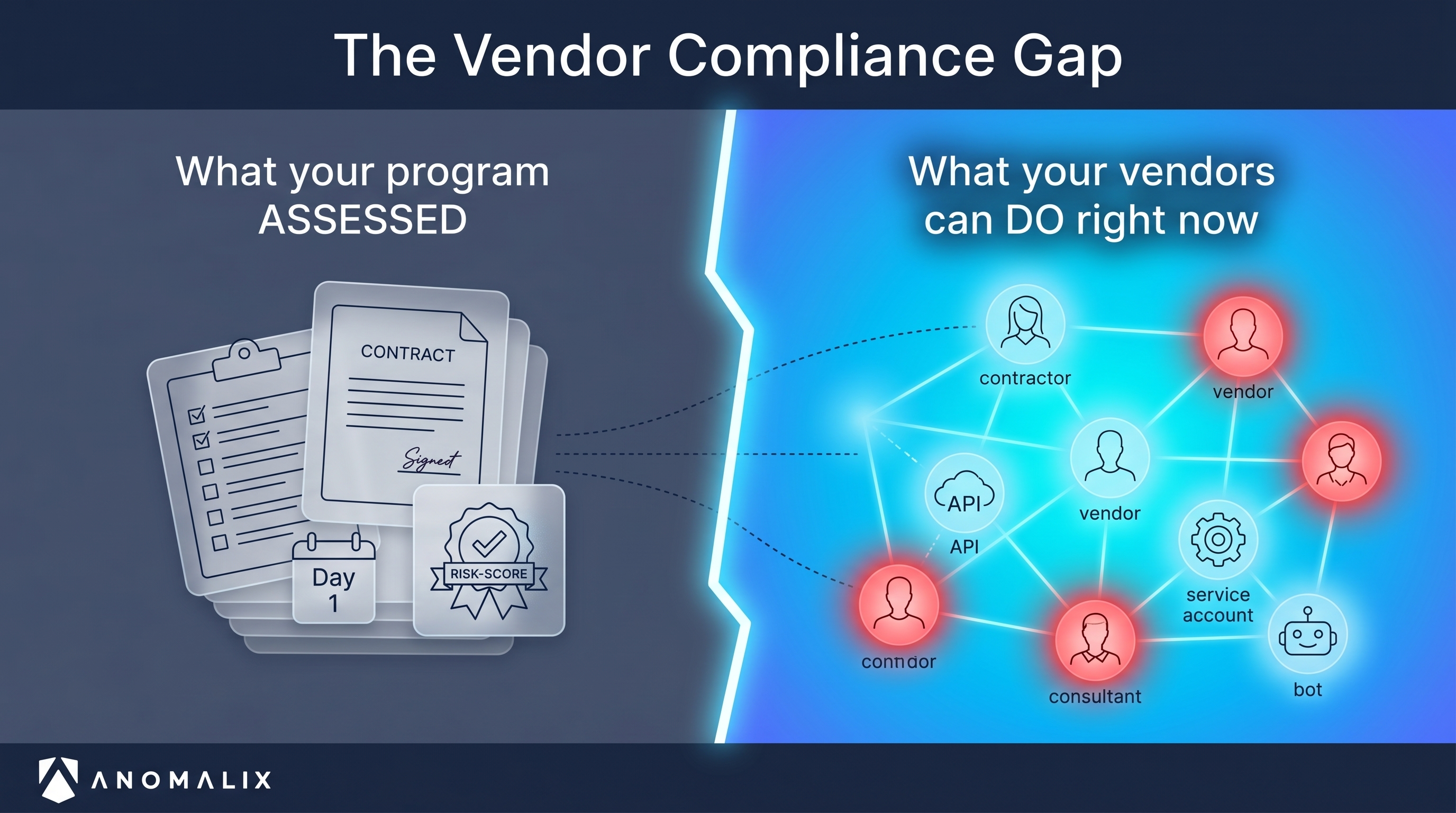
Here it is - the awkward reality many in security and compliance quietly accept. You issue the form. The supplier answers neatly. Lawyers attach proper terms. Signatures follow. Yet once things start up, roles shift, temporary staff come and go, someone sets up an automated access channel to move information across platforms, and soon enough, the clear picture of risk you thought you had slips away, replaced by something far messier than paper trails suggest.
Here lies the problem with vendor rules. What your outside security plan thinks is true often misses what vendor accounts are really doing inside your tech today. Forms, promises, and legal terms capture only one point in time. These tell you nothing about login rights still active weeks after work stops, the advisor with too much reach who never got reviewed again, or the secret code pulling files long past its due date.
Watchdogs are paying attention now. Criminals too. A 2025 report by Security Scorecard showed over one-third of last year’s data leaks came through outside partners. Meanwhile, research from Imprivata and the Ponemon Institute claimed it's worse - close to fifty percent of companies faced a security incident tied to vendors within just one year. What fuels these incidents isn’t some high-tech trick. It’s leftover logins. Old passwords left active. Accounts abandoned but still live, meant to be shut down yet somehow missed.
That gap won’t shut with extra forms. Fix what holds the risk instead - identity itself.
Traditional TPRM Stops Early
Out there, most third-party risk setups were built for slower times - long-term suppliers, clear roles, just people logging in. Those days have faded. Today’s company works with countless outside firms, every one adding layers: freelancers, experts on contract, tech teams running remotely. On top of that come machines acting alone - scripts, automated tasks, robot processes, connections between software - all talking across company lines without a person in sight.
Most digital IDs inside big companies won’t belong to people, experts say. Once bots and systems outnumber staff, checking access only at the start isn’t a policy flaw - it’s baked into the setup
- A single check loses value fast. Right when you start, things shift. One form shows just one moment. Live access moves as people act. These paths split immediately.
- Most daily choices about who gets in happen here and there. While procurement holds the contract, IT handles setup. The business manages contact, yet nobody takes full responsibility for identity. Gaps appear where duties meet.
- Out there among the lines, machine identities stay hidden. Hidden too are APIs - alongside service accounts - not showing up much in what vendors write. Even so, these unseen elements tend to carry wide access. Their permissions stick around longer than most.
- Someone has to recall for offboarding to happen. If a contract simply fades out, nothing triggers. Permissions stick around anyway. Each old account adds another crack where trouble might get in.
What you get is a system that looks solid in theory yet full of holes when tested. Passing inspection doesn’t mean safety, since checks focused on paperwork while attackers exploited login details.
Vendors As Governed Identity Groups
What really changes things begins in how you think, not what tools you use. Forget seeing a vendor just as a deal you reviewed on paper. Picture it instead as a crowd of roles - some people, some systems - all linked to someone responsible, with clear limits, levels of danger, their own clocks ticking down, rooted in the agreement that let them in.
Right now, if identity is how you track who a vendor really is, then everything about your risk checks turns into something you can prove on the spot. Rather than wondering whether some outside company cleared an old review, you shift to what actually matters: Who exactly from their team is inside your systems at this second. What parts of your data or tools are those people touching. Whether any of it goes beyond what was signed off in the agreement, given where your risks stand today.
Built on that idea, idGenius brings together workers outside the company - contractors, suppliers, allies, experts, tech support services, even machines - into one clear record. Each profile gets extra details most systems ignore: when contracts start and end, job numbers, which team invited them, their qualifications, how much risk they carry. Access rights link directly to actual work tasks. Identities fade out once purpose fades. Assessment data and entry permissions begin aligning, since both follow the same structure now.
What Autonomous Really Means
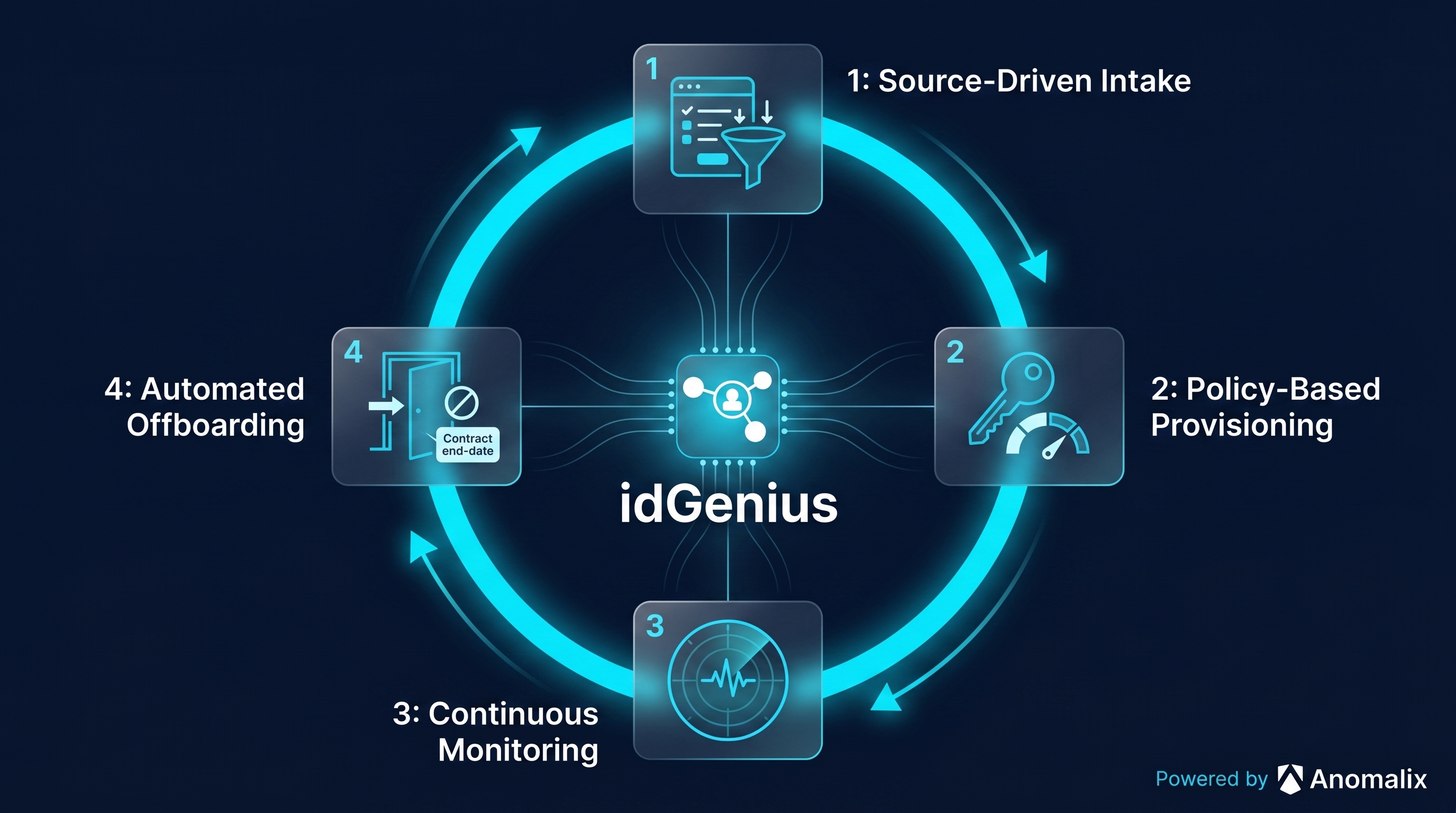
Out there, automated outside help handling isn’t just saying “AI inside.” That label fits when actions feed into each other, never pausing for someone to wake up and act. One piece follows another - four pieces actually - that turn the idea into something you can touch.
Out of the gate, source-driven intake ditches spreadsheets entirely. Instead of scattered files, business sponsors log identity details right when they onboard someone. Workflow prompts make sure every piece fits - what kind of access, which systems, who signs off. Information flows in only after checks clear, blocking messy entries up front. Accuracy kicks things off, not cleanup later. Governance gains ground because it begins with clean facts.
Automatic enforcement of least privilege happens through policy rules. One project’s contractor gets no extra rights just because a permanent collaborator has them. Access comes from role, project needs, or assessed risk levels. Higher-stakes situations trigger additional checks before approval. The system handles decisions internally, skipping message threads entirely.
Access stays accurate because the system updates itself automatically. Each new hire, role change, renewal, or departure kicks off an instant review. As responsibilities shift, permissions shift with them. Once a contract expires, exit routines activate by design - cutting entry to cloud folders, team platforms, internal networks, remote connections, and online services, beyond just the main login. That leftover account - the top cause of outside risks - just disappears when it's no longer needed.
What if your security could learn? idGenius watches how identities act, then spots when something shifts. Not every change is risky, but timing matters - like logins at odd hours. Access patterns evolve, yet sudden moves stand out. A forgotten API key waking up might mean nothing. Or it might need attention. When behavior drifts too far, responses happen fast: permissions shrink, sessions stop, alerts rise. Risk isn’t just caught. It’s shaped ahead of time.
What really lets the system grow isn’t more people. Instead, one rule set applies uniformly across countless vendors. A single setup handles loads of accounts quickly. The tool takes over tasks too slow for manual checks. Scale comes from consistency, not effort.
Governing What Was Left Out of the Records
What sets dedicated third-party oversight apart from broad identity systems forced into the role? A pair of distinct strengths. Each tackles the compliance shortfall head-on, yet in its own way. One pins down accountability where it's weakest. The other tightens control at access points most often overlooked.
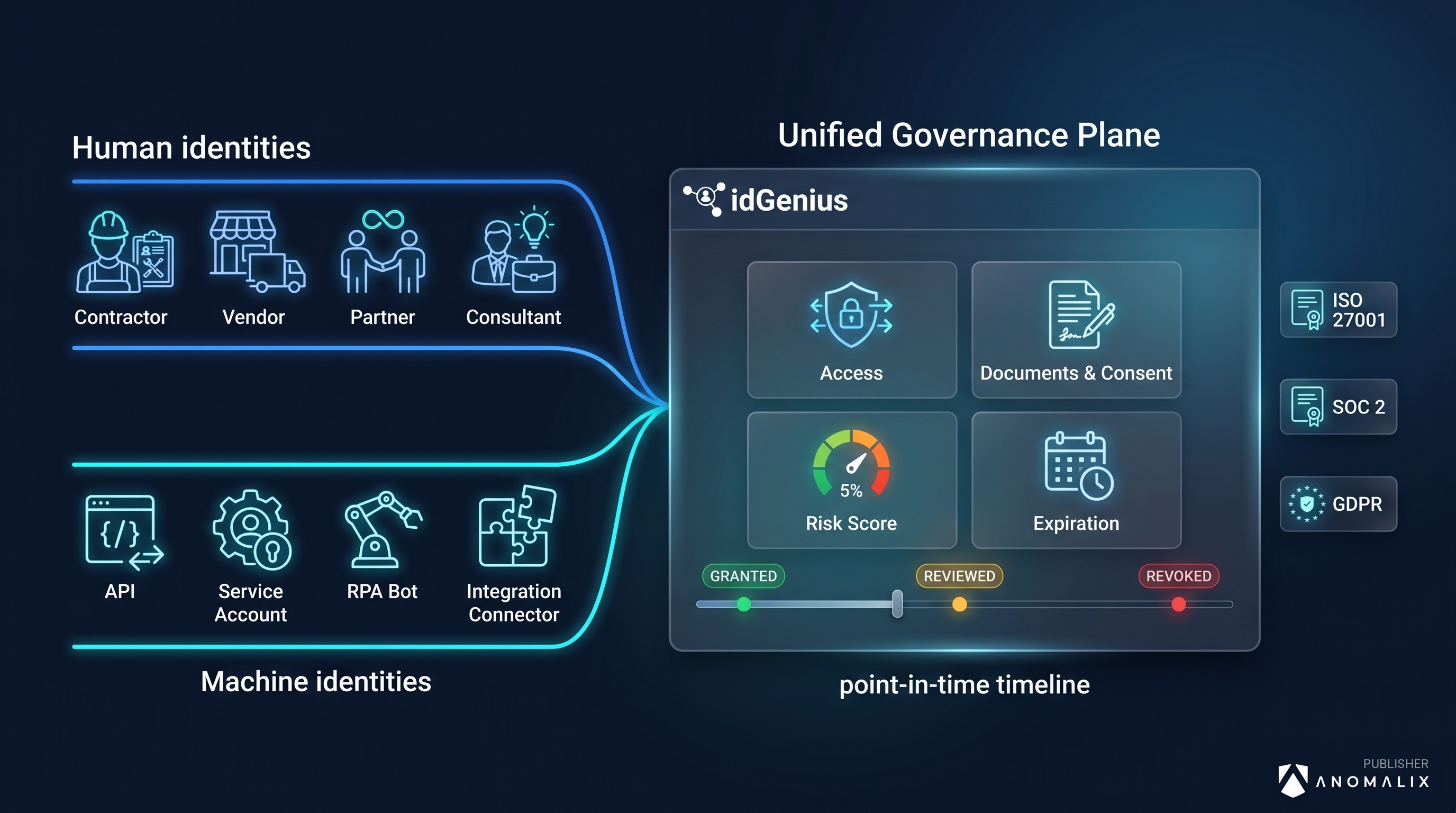
One key part handles documents and permissions. Identities in business settings come from outside companies tied to main service contracts, confidentiality deals, licensing rules, along with data protection duties. Keeping those papers linked directly to the user profile - using digital signatures plus oversight of approvals in one place - ensures the reason for access sits right beside it, reachable instantly. If someone checking compliance questions a permission’s purpose, the explanation travels with the account, instead of hiding somewhere in a forgotten file system.
Next comes seeing things exactly as they stood at any given moment. Standards such as ISO 27001, ISO 31000, SOC 2, HIPAA, GDPR now expect proof not only of current access but also past access - who held it, when, and the reason behind it. Instead of guessing, idGenius captures snapshots of each outside user's permissions right when changes occur. Preparing for audits shifts from chaotic last-minute scrambles to a quick search. Gathering proof goes from taking days down to mere minutes. Since data is recorded live, during actual events, there’s no need to piece together what might have happened later on.
Here’s where things shift toward real-world usefulness. Most extended IGA tools manage people well enough, especially temporary workers, yet still miss key parts like automated system identities, personal data handling, or permission tracking. Built right from the start, idGenius fits neatly beside your current access systems - adding tighter controls across vendor networks while letting your present setup stay exactly as it is.
Cost Center Becomes Strategic Control
Right now, companies doing this well aren’t only cutting down risks - they’re reshaping how governance costs work. With unused and high-permission accounts removed automatically, exposure drops without extra effort. Getting people started moves faster since access follows a clear plan, not random approvals from each supervisor. Being ready for audits turns into normal routine instead of last-minute panic every few months. Security staff spend less time fixing outside access problems, shifting those hours to tasks that truly move things forward.
Out here, scaling trust comes down to delegation. When departments invite partners, they follow preset paths - each step shaped by policies baked into the system. Oversight stays tight because automation handles limits and deadlines behind the scenes. Those closest to the work get room to act, since rules stay firm even when hands-off. Balance shifts: moving fast no longer means cutting corners.
Closing the Gap Before It Closes On You
Outsiders aren’t rare guests anymore inside your setup. Most now, they move through the weakest gates leading straight to what matters most. Fixing vendor rules won’t help if you just tweak forms or tighten wording - risk wasn’t hiding in paperwork anyway. Lived-in logins, shifting roles, silent upgrades in power - that’s where danger lives, long after checks were signed off.
Out in the open, trust isn’t assumed - it’s proven again and again. IdGenius checks each outside user right when they enter, applies rules automatically, manages access from start to finish, and keeps records clear for review - whether it’s a person or a system needing entry, no matter how large the network grows.
Right now, your tool might track who you’ve reviewed - yet miss what vendors are actually doing today. That difference? It’s the first thing to measure. Imagine seeing exactly where third-party access risks live across your systems. Picture how automated oversight fits within your actual setup - we’re ready to walk through it with you.
Got questions about third-party access? Try info@anomalix.com. That email connects you to a team checking identity setups. One tool they look at is idGenius. It manages outside workers - contractors, vendors, partners. Confidence comes from clear oversight. Security tightens when systems track who does what. Scaling up needs structure, not guesswork. The platform adapts as teams grow. Risks drop when visibility increases. Every login gets reviewed. Control improves without slowing work down.
Mohammed Elkhatib is Founder and CEO at Anomalix. Prior to founding Anomalix, Mohammed led global operations for Aveksa (acquired by RSA) where he was responsible for Sales, PreSales, Engineering and Professional Services. Mohammed is an Identity Security expert with over 25 years of IT and Business experience.